
LinkedIn Right Rail Ads: How the Test Works and When to Try It
Google appears to be testing a new search ad feature that integrates third-party endorsements directly into ads.
We spotted search ads displaying publisher logos and supporting quotes within the ad unit itself, effectively layering external validation into paid placements.
At this point, Google has confirmed this is a small-scale test. There’s no public roadmap, no confirmed beta access, and no clarity on whether this will become a controllable extension for advertisers.
But the strategic implications are worth unpacking.
What This Feature Suggests
The examples out there so far include:
- Publisher logos embedded within search ads
- Supporting quotes from third-party sources
- Language reinforcing credibility and authority
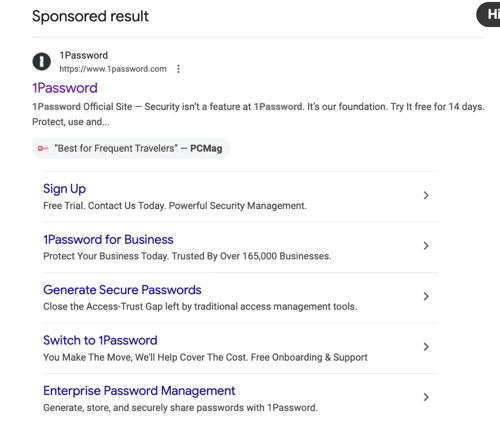
In practical terms, this blends PR-style validation into the paid ad experience.
That matters for two reasons:
- User trust. Third-party validation can increase credibility and potentially improve CTR.
- SERP real estate. Visually, these endorsements take up more space and differentiate ads from competitors.
If this rolls out more broadly, it could materially change how brands approach both ad creative and reputation management.
Why This Matters Now
Search is increasingly crowded and increasingly automated. As ad formats converge and creative variations become easier to replicate, differentiation becomes harder.
Third-party validation inside the ad unit is a way to signal:
- Credibility
- Authority
- Recognition beyond owned messaging
That may matter even more in a climate where users are skeptical of both ads and AI-generated content.
Could This Drive Stronger PR and Paid Alignment?
If this feature becomes something advertisers can influence or control, it opens the door for tighter collaboration between:
- Paid media teams
- PR teams
- Brand teams
Depending on how Google structures it, brands may begin prioritizing publisher sentiment and structured media coverage even more heavily to drive paid performance that goes beyond awareness.
That’s a meaningful shift. Historically, PR and paid teams have operated in parallel. This could create an incentive for much tighter integration.

What About Influencers and Creators?
So far, the examples circulating appear to pull from established publishers and news organizations.
There’s no indication that influencer quotes or creator endorsements are included at this stage.
However, the broader signal that third-party validation matters is getting harder to ignore. If Google sees performance lift from publisher endorsements, it’s not unreasonable to expect future expansions.
Could influencer or creator endorsements become eligible inputs? Possibly, but that would require significant guardrails around credibility and verification.
For now, this appears publisher-led.
How Brands Should Think About Preparing
Even without formal access to this feature, brands can still take proactive steps.
This test reinforces the importance of aligning paid messaging, organic content, and PR narratives – all of which rely on consistent branding and positioning.
Teams should ensure that language used in outreach, earned media, and campaigns consistently supports the same value propositions. If publisher sentiment becomes a visible part of paid placements, messaging alignment will matter more than ever.
Brands that already maintain consistent positioning across channels will be better positioned if this feature expands.
Is This Connected to AI, or a Counterbalance to It?
Google hasn’t revealed whether Gemini or other AI systems are involved in powering this test.
However, it’s easy to imagine AI playing a role, particularly in identifying relevant publisher mentions or surfacing supportive quotes from external sources.
On the other hand, it’s possible this is partly a response to AI fatigue.
As AI-generated summaries increasingly dominate search results, embedding human, third-party validation into ads could be a way to reinforce trust and signal legitimacy.
What the Future Might Hold
There are plenty of open questions:
- Will this become a controllable extension?
- Will advertisers be able to choose which endorsements appear?
- How will eligibility be determined?
- Will this expand beyond Search?
Until Google shares more, we’re watching.
If third-party endorsements become a scalable search ad feature, they could:
- Increase CTR through added trust
- Encourage deeper collaboration between paid and PR
- Reward brands investing in credible publisher coverage
- Reshape how authority is displayed in paid media
For now, it’s a small test. Strategically, it points in a clear direction: paid performance is becoming increasingly tied to external validation, not just creative optimization. That’s something brands should be thinking about now.

Kansas City native Sydney Suttles has been on the digital marketing scene since 2018, with years of experience in paid search and social marketing for brands in healthcare, higher ed, finserv, B2B, telecommunications, and CPG. She joined JDM in 2025 and immediately began providing strategic and tactical value for our clients with her proactivity and ability to see the whole marketing picture. She's highly skilled at tying Google Ads and LinkedIn Ads to business-level impact for her clients.